Advantages of English Lessons in Nature for Children’s Development
In the modern world, where technology plays a central role, it is sometimes important to remind ourselves and those around us of the value of direct interaction with nature and the environment. Conducting lessons outdoors becomes one of those unique opportunities that can diversify the educational process and bring fresh colors into it.
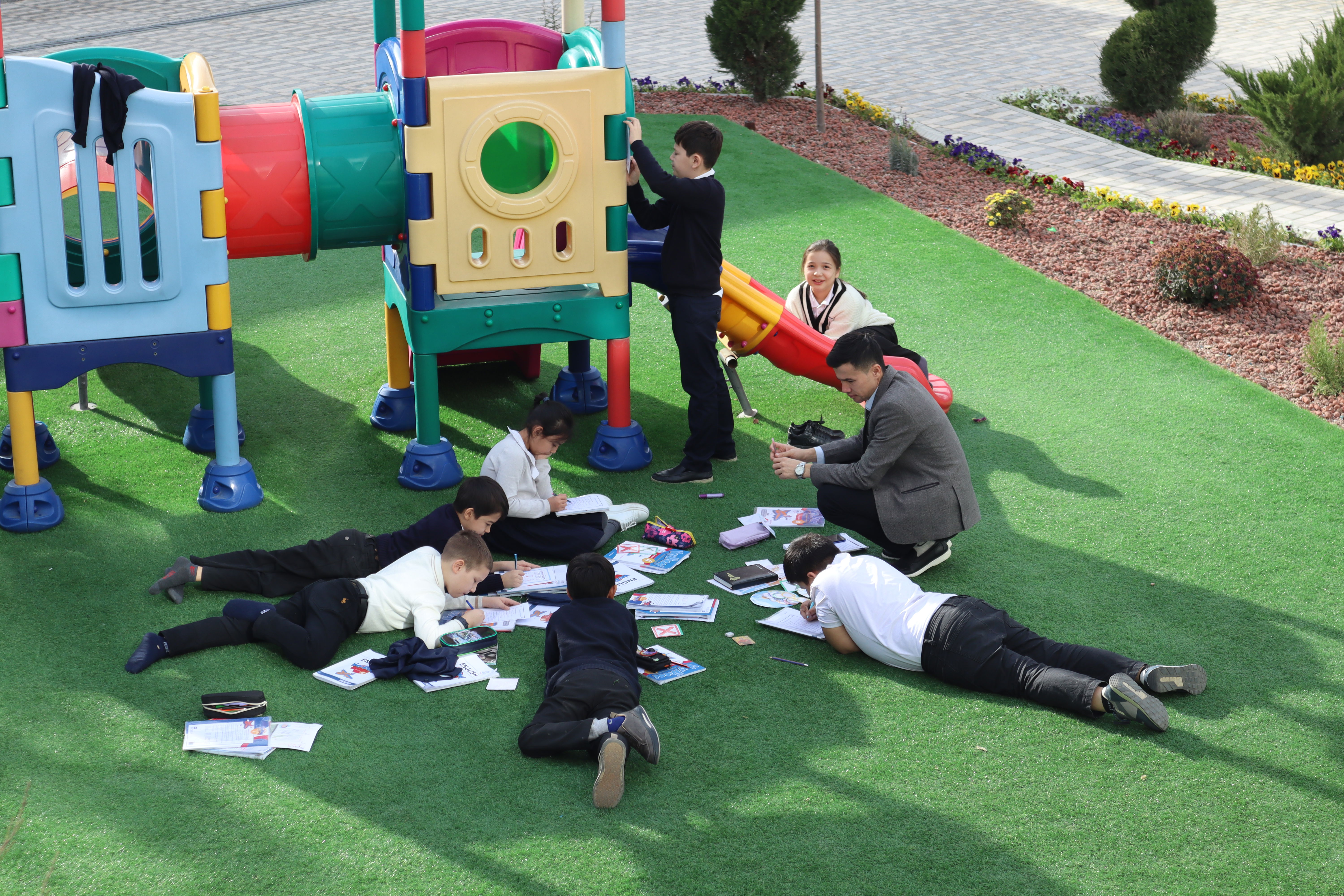
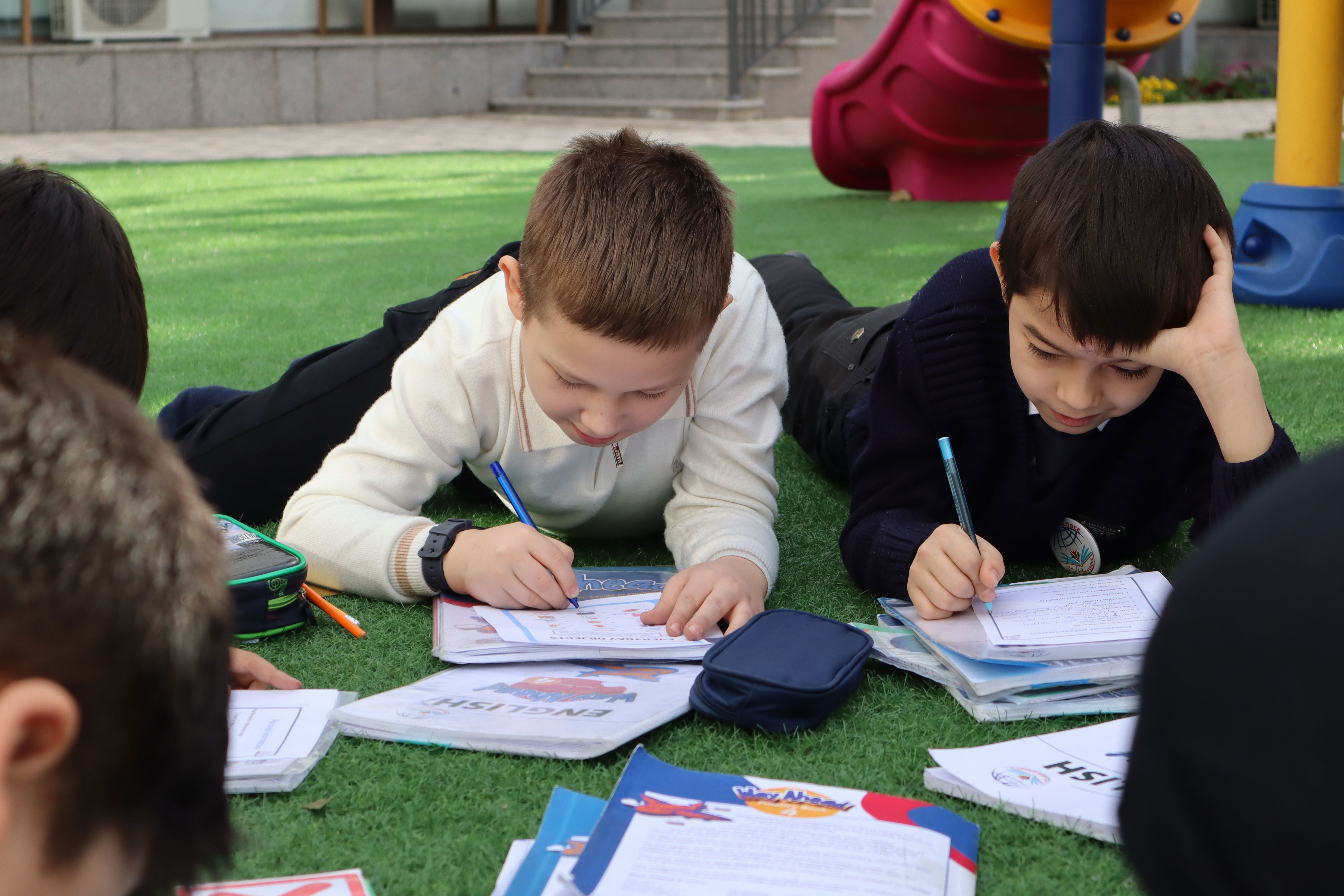
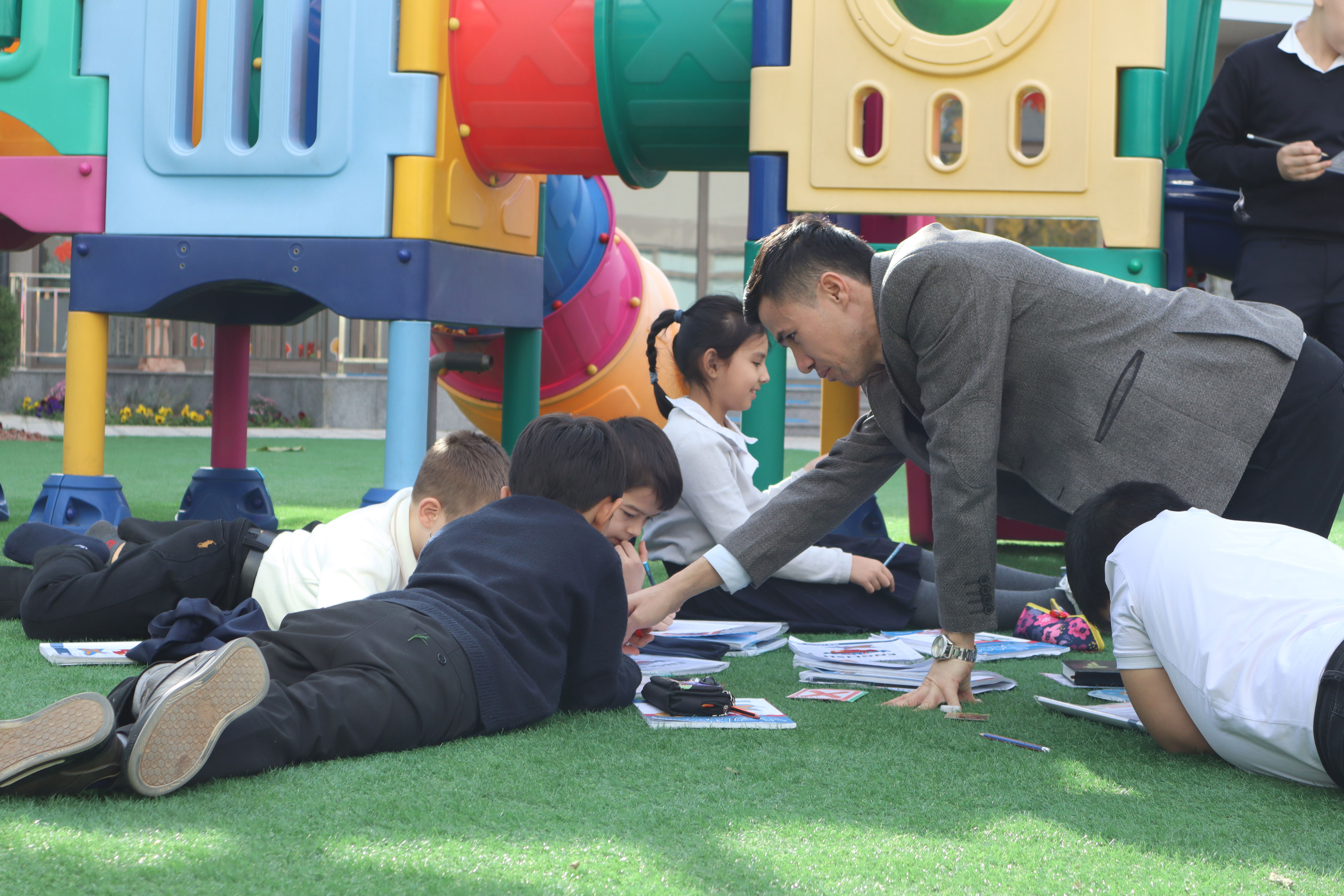
Recently, I observed an English teacher conducting a lesson with his students in the school yard. They were seated outdoors, completing tasks and discussing the learning material. This kind of practice has many advantages, both for learning a foreign language and for the overall development of children.
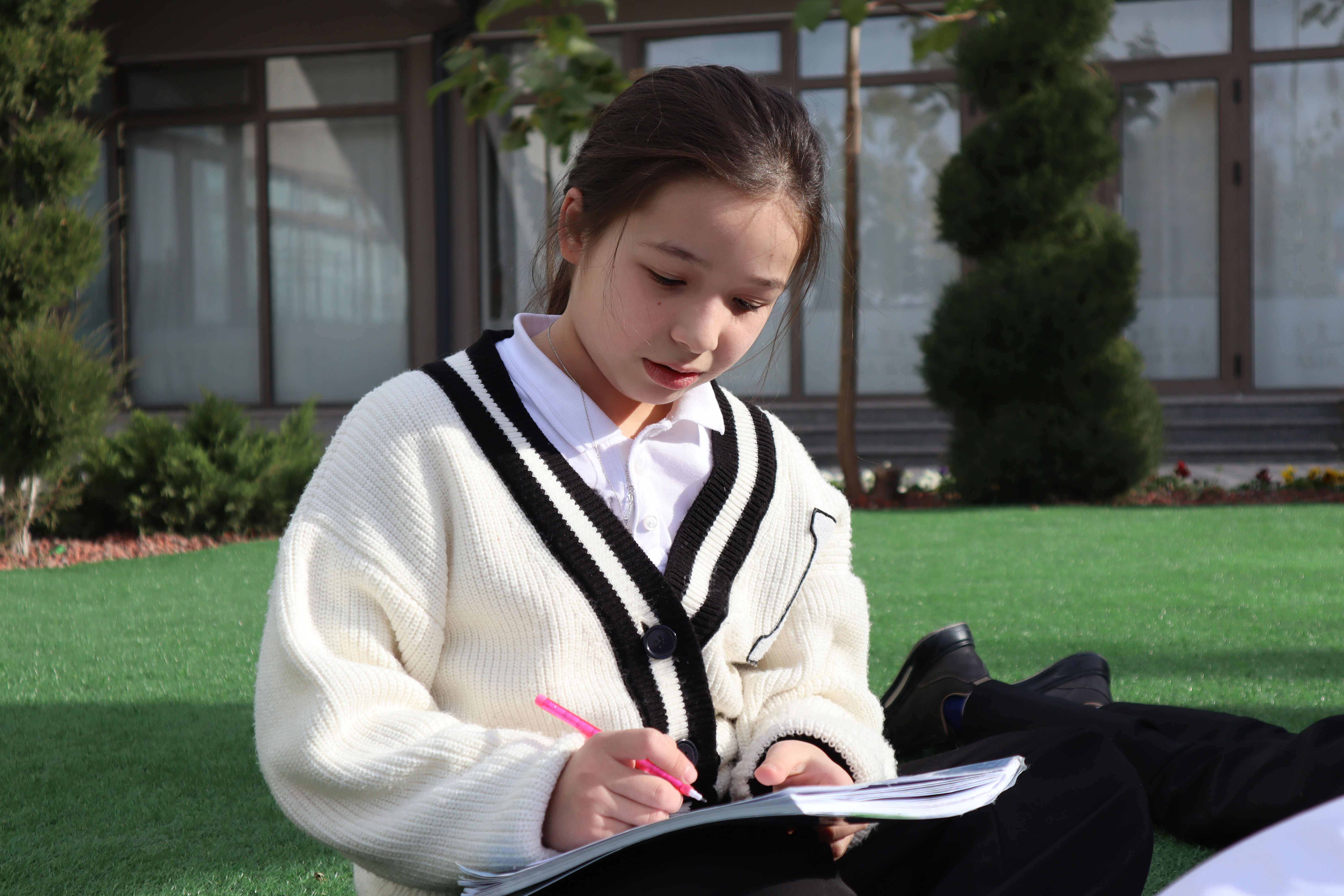
First of all, outdoor lessons help children feel more free and comfortable. Open space, fresh air, and the surrounding nature reduce stress and tension that can sometimes arise within the classroom. This is especially important in language learning, where free communication plays a key role. In a more informal environment, students feel more confident, which contributes to the development of their speaking skills.
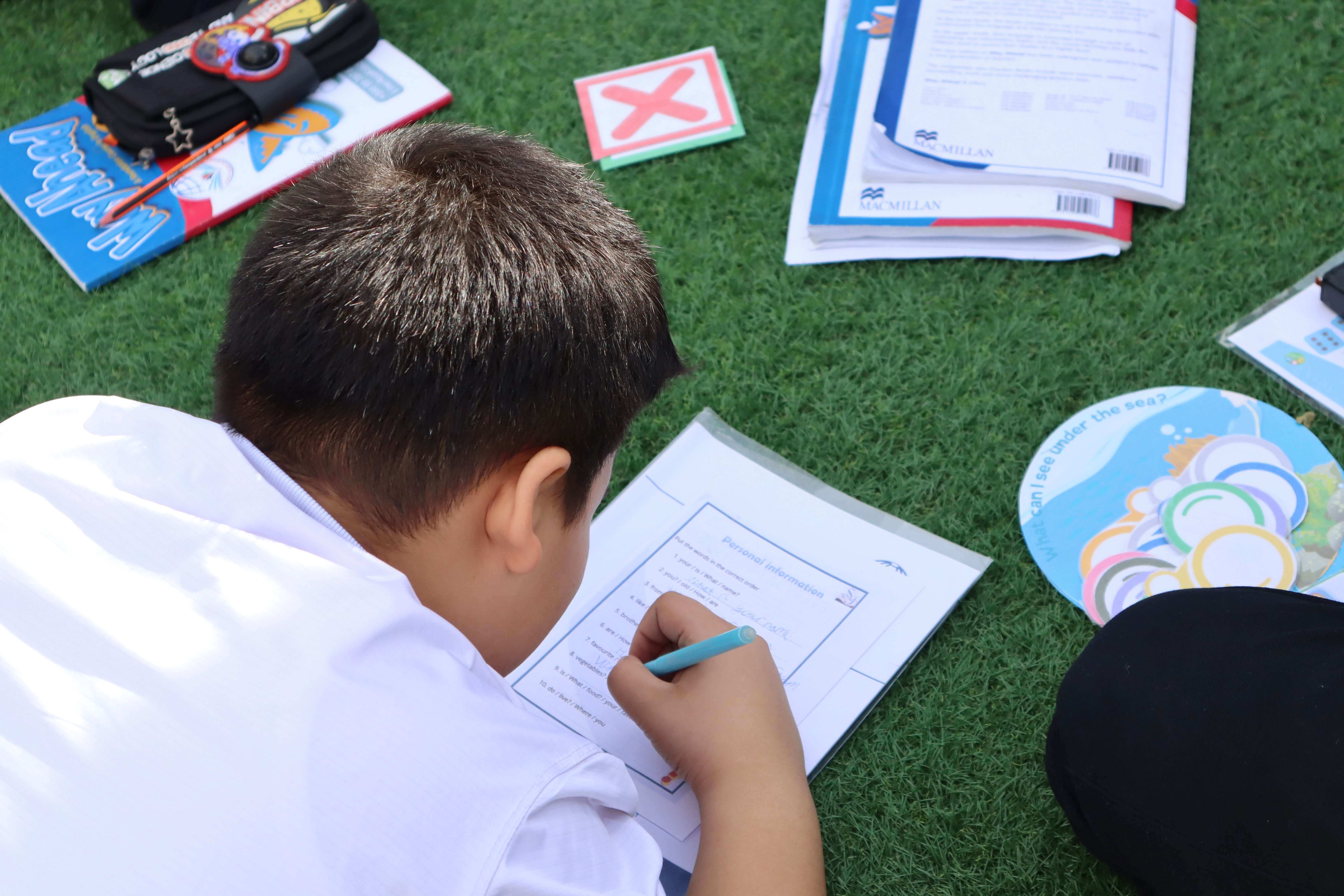
Secondly, English, as one of the most in-demand languages in the world, opens up many opportunities for children. Knowing English not only allows them to travel and communicate with people from other countries but also gives access to a vast amount of information, including scientific research, books, films, and online courses. Lessons conducted in a creative environment help emphasize the practical value of the language and motivate children to learn it.
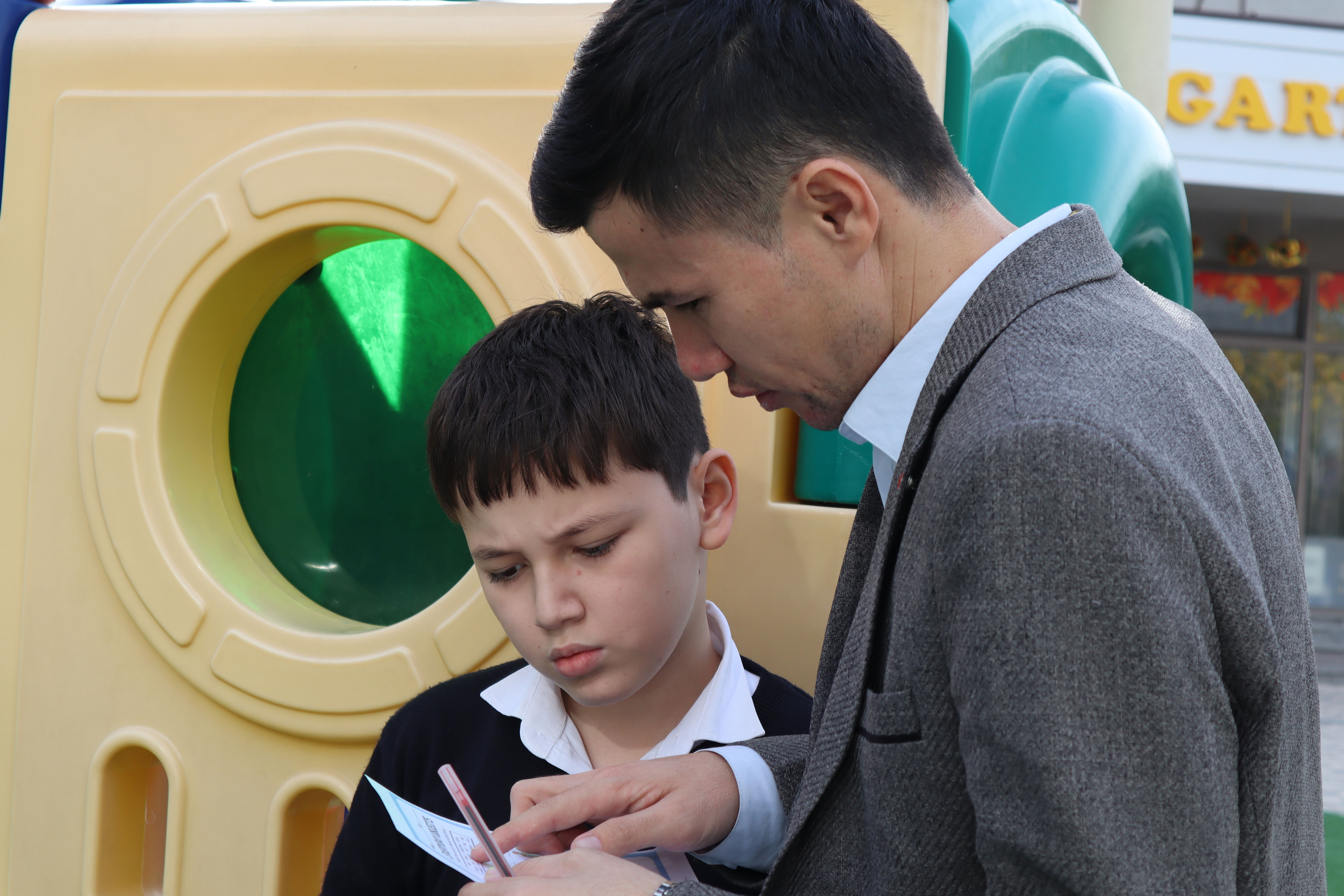
In addition, learning any foreign language helps develop cognitive abilities. Research shows that children who study foreign languages demonstrate higher levels of memory development, analytical thinking, and problem-solving skills. Extracurricular activities conducted in nature can further enhance children’s observation skills, curiosity, and ability to find inspiration in the surrounding world.It is also important not to forget the value of movement and physical activity.
Combining lessons with walks or active games allows children not only to better absorb the material but also to take care of their physical health. This is especially relevant in today’s lifestyle, where children often spend a lot of time in front of computer and smartphone screens.
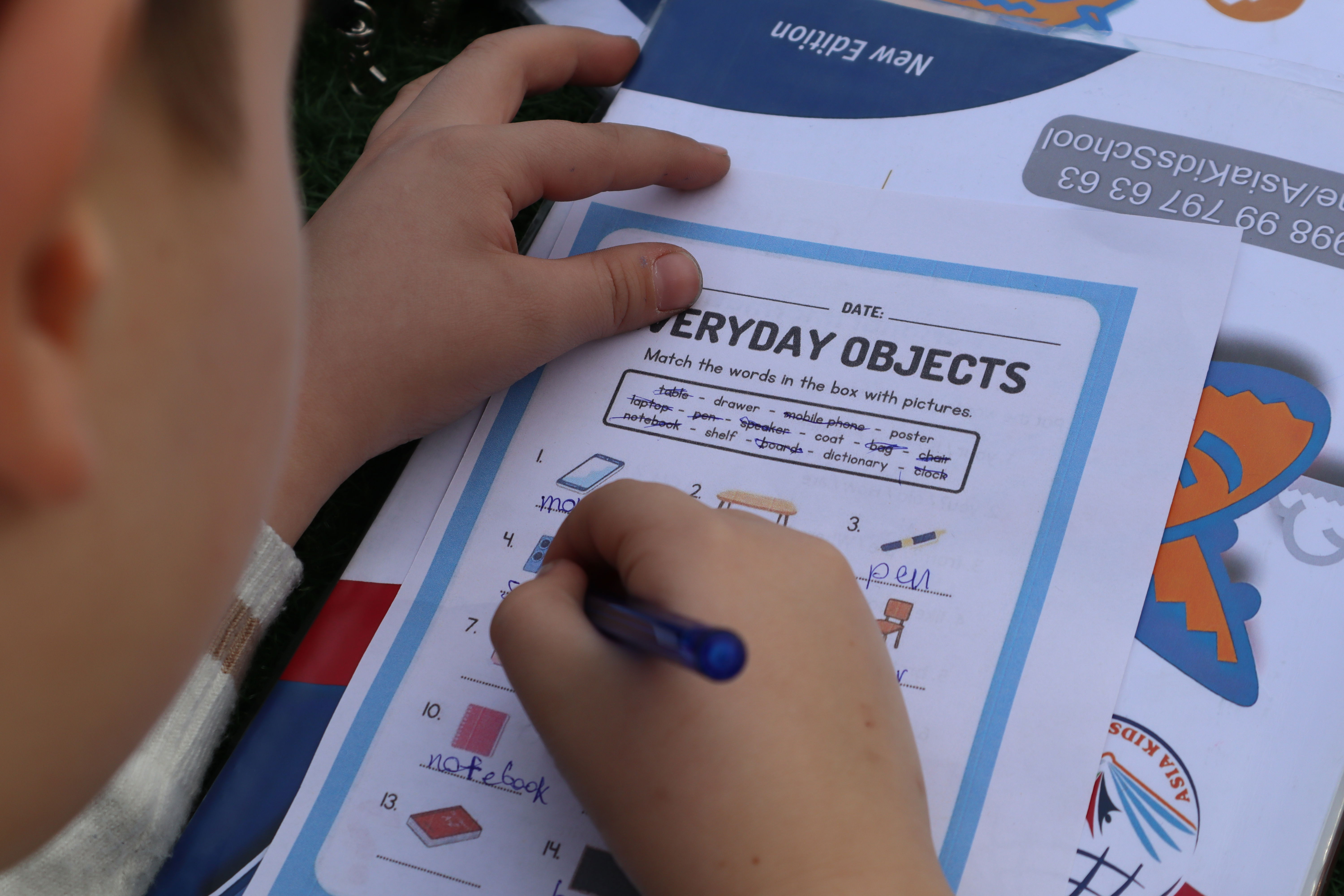
Thus, outdoor lessons represent a unique opportunity to combine learning and relaxation, education and inspiration. They develop in children not only language skills but also self-confidence, a love for the surrounding world, and a desire for knowledge. English becomes for children not just a school subject, but a tool for exploring the world and communicating with it. This not only makes the learning process more engaging but also leaves children with vivid and pleasant memories that will stay with them for a lifetime.
