Open Lesson on Pushkin’s Fairy Tales: A Journey into the World of Magic and Creativity
On November 27, an open literature lesson was held in Grade 5B on the topic “A Journey into the Fairy-Tale World of Alexander Sergeyevich Pushkin.” The lesson was conducted by Russian language and literature teacher Nazira Erkinovna, who invited the students to embark on an amazing journey through the pages of Pushkin’s fairy tales.From the very first minutes of the lesson, a magical atmosphere filled the classroom.
The students presented a prepared presentation in which they spoke about Alexander Sergeyevich Pushkin, his works, and the significance of fairy tales in Russian literature. The colorful slides brought to life famous characters such as the Golden Fish, the Swan Princess, and Balda, and also featured illustrations to the tales created by the students themselves.
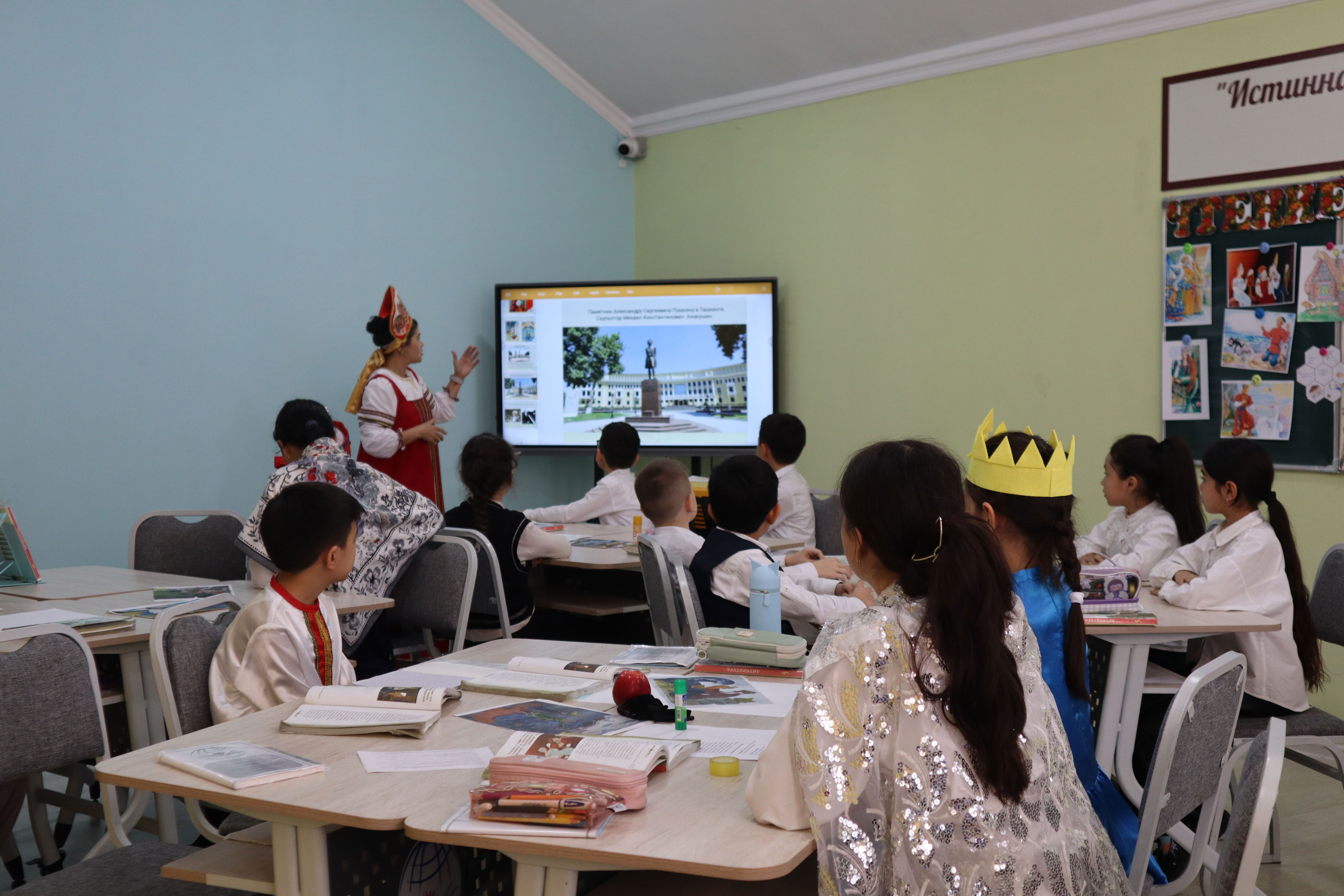
The highlight of the lesson was the dramatization of fragments from Pushkin’s fairy tales. The young actors immersed the audience in the atmosphere of a magical forest, the sea, and royal chambers. Each scene was carefully prepared: costumes, props, and musical accompaniment helped create vivid and memorable images. The participants demonstrated not only their literary knowledge but also their acting skills, which earned them enthusiastic applause from classmates and guests.In addition, exciting competitions and quizzes were organized during the lesson.
The students answered questions about the characters and plots of the fairy tales, solved riddles, and recalled quotations from Pushkin’s works. Each participant tried to show their knowledge and attentiveness, and for correct answers, the students received symbolic prizes.
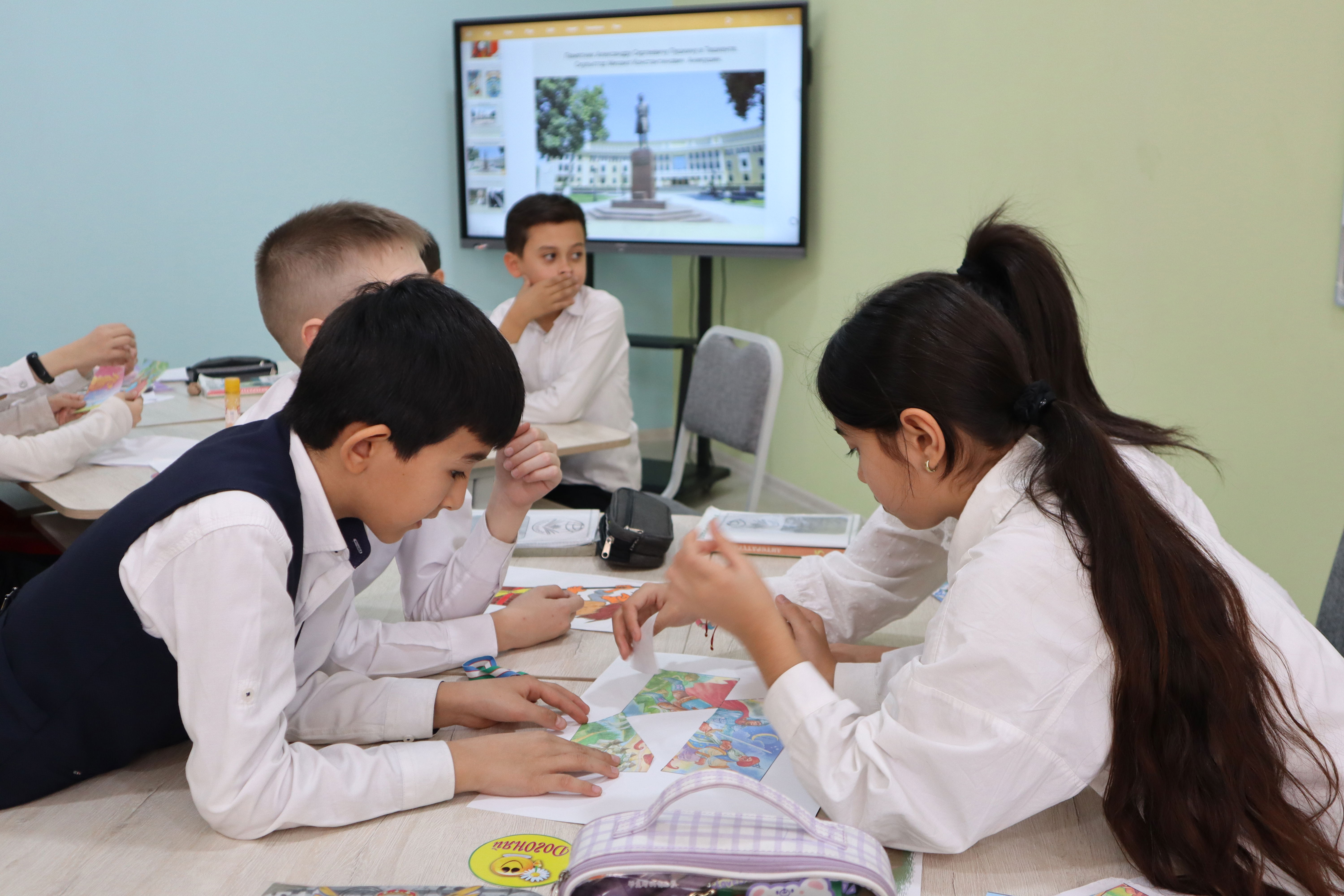
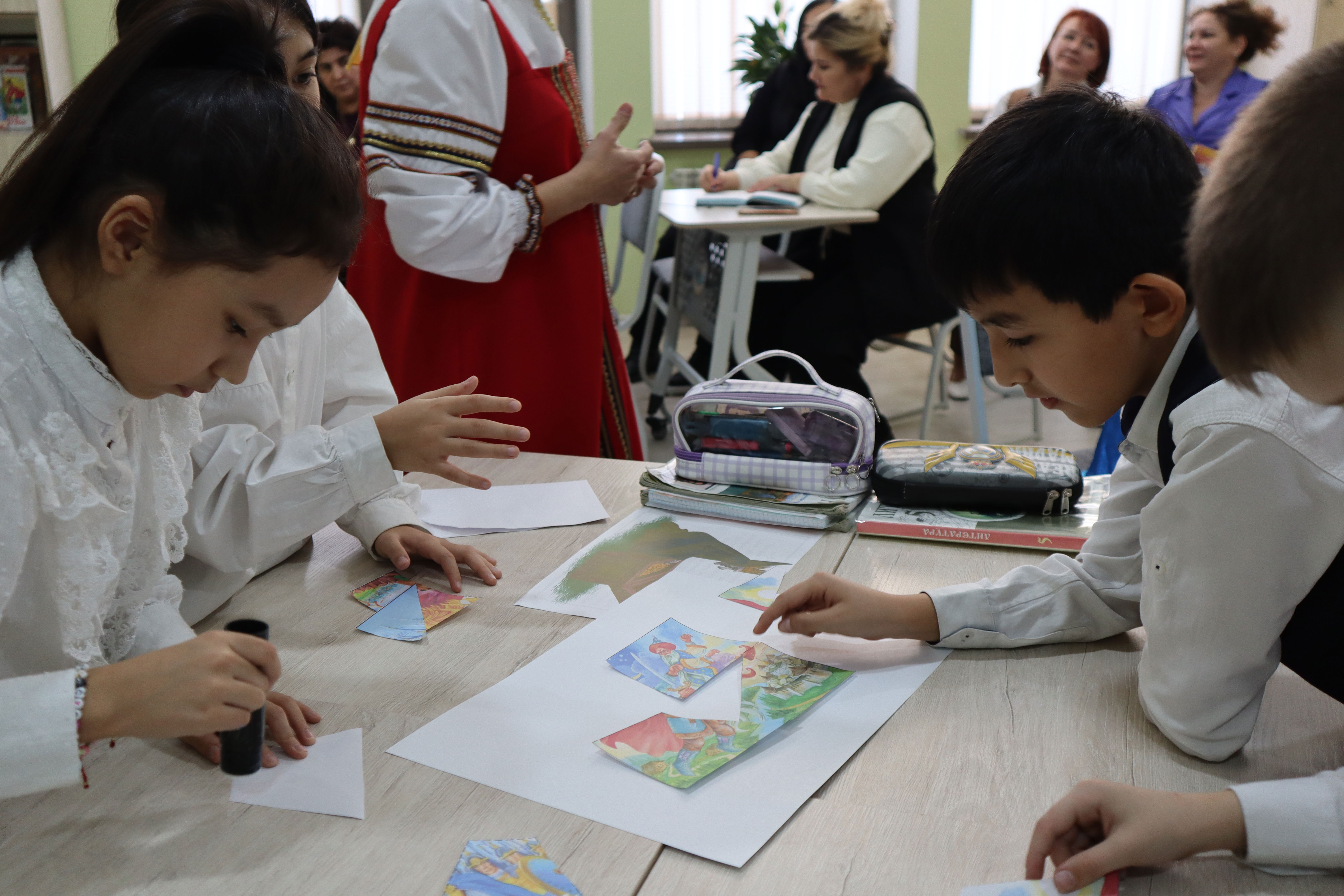
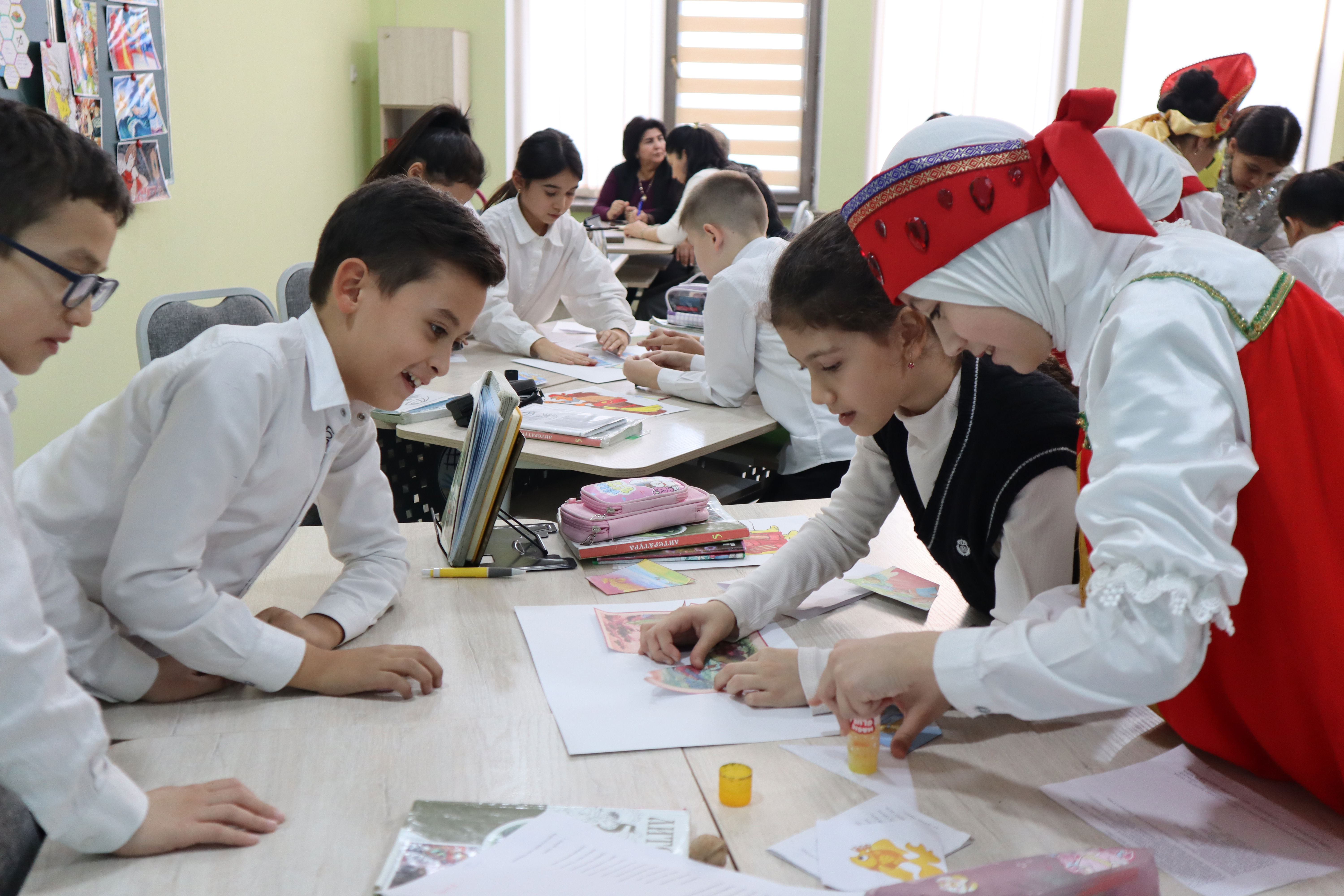
Special attention was drawn to the tasks involving the completion of HEX maps. This creative form of work allowed students to demonstrate their analytical abilities and show their understanding of the text. The students filled in hexagonal maps, connecting key words, ideas, and images from the fairy tales. This approach not only contributed to the development of logical thinking but also helped reinforce knowledge in a game-based format.
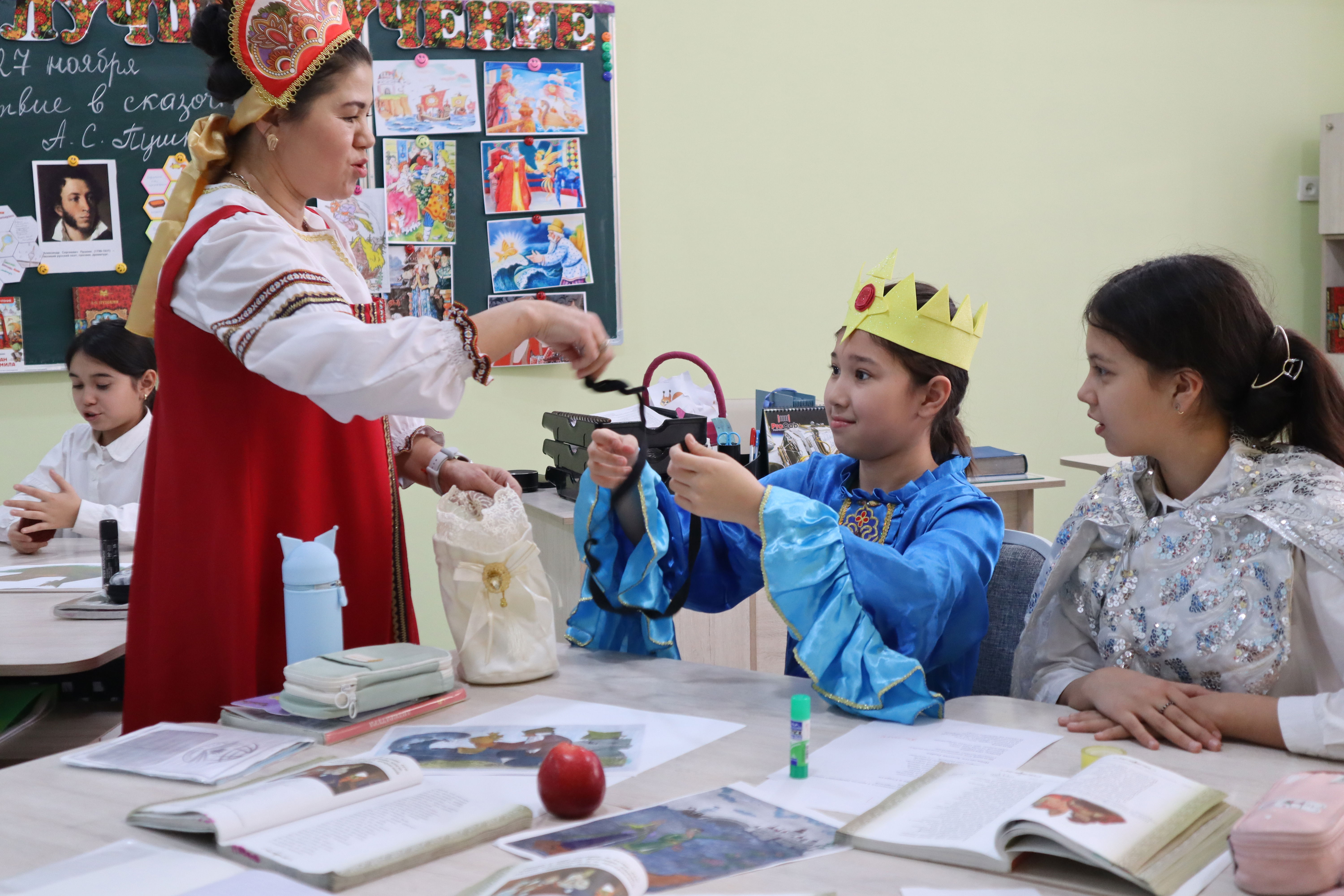
Equally interesting was the “Magic Bag” activity. The bag contained items related to the fairy tale characters. The students had to guess from which fairy tale each item was taken and explain its significance. This part of the lesson sparked genuine interest and active participation from everyone present.
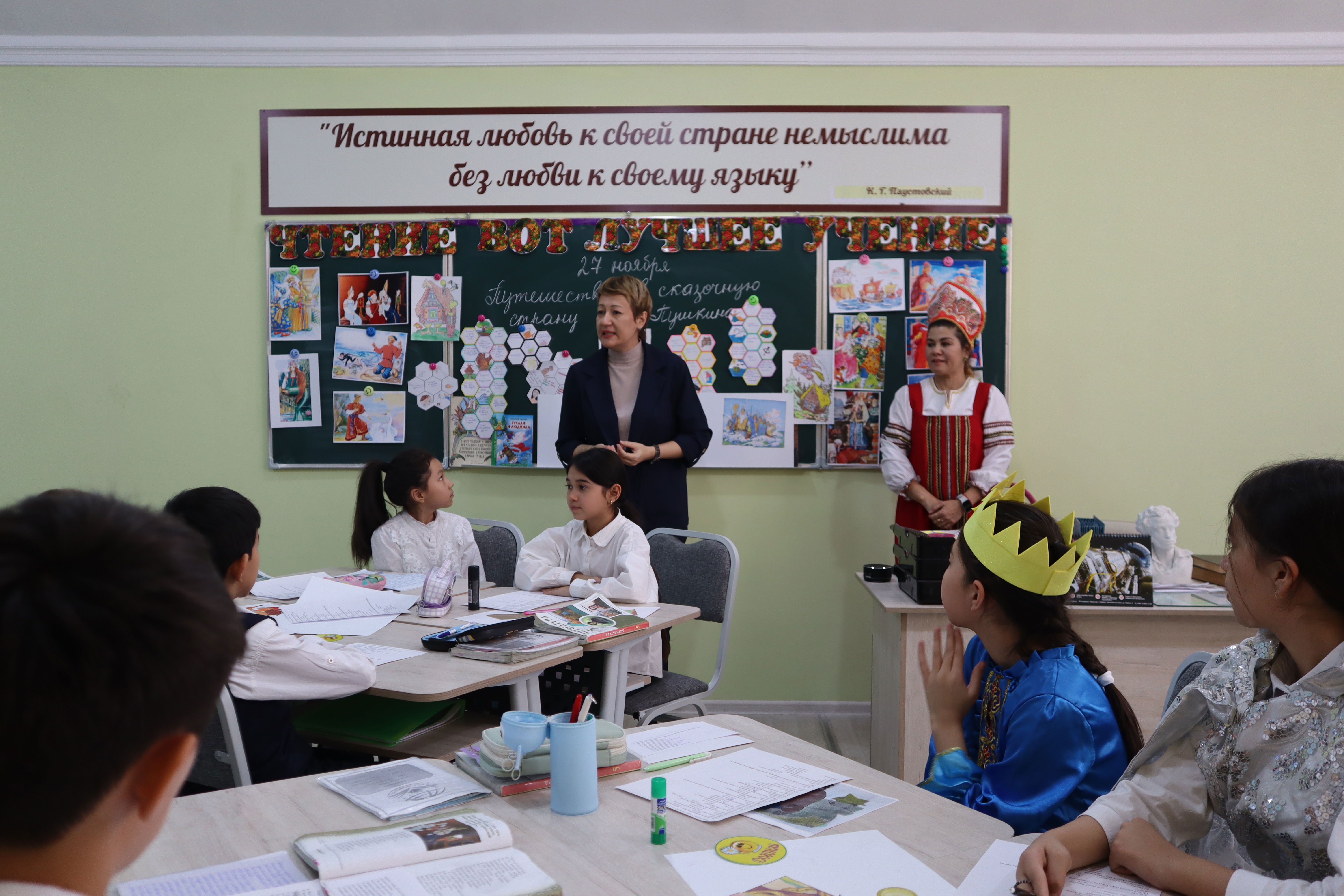
The lesson concluded with a summary of the results. At the end of the class, another Russian language teacher, Ekaterina Viktorovna, praised both Nazira Erkinovna and the students for such an engaging open lesson. She noted their creative approach and expressed confidence that lessons like this help to deepen the understanding of the beauty and richness of Pushkin’s literary heritage. The students, in turn, shared their impressions. Many admitted that they rediscovered Pushkin’s fairy tales, saw them in a new light, and felt inspired to continue studying his works.
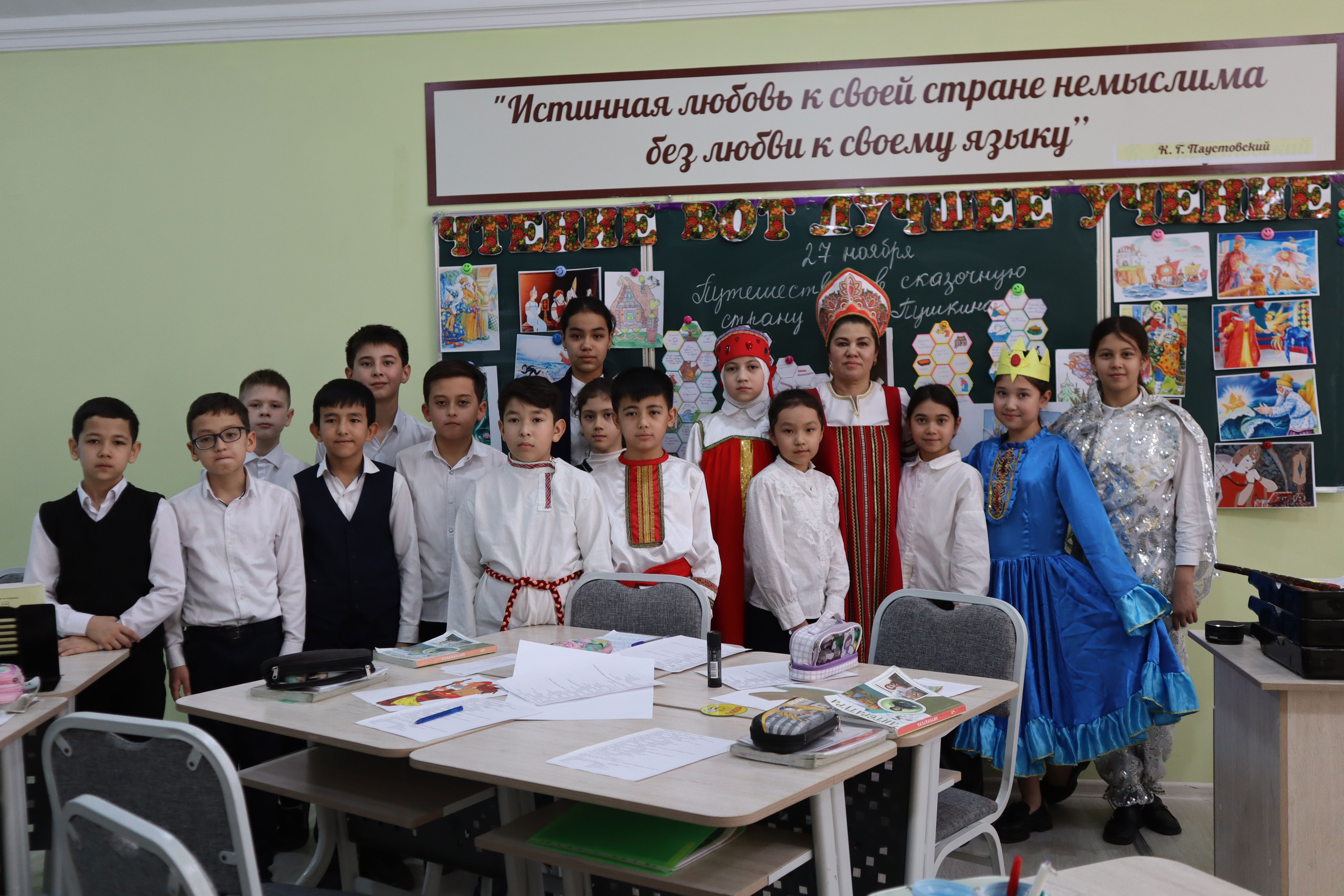
The open lesson became not only an educational but also an inspiring event, bringing together students, the teacher, and guests in one great literary journey. Such events prove that studying classical literature can be an engaging, creative, and educational process that remains in memory for many years.
